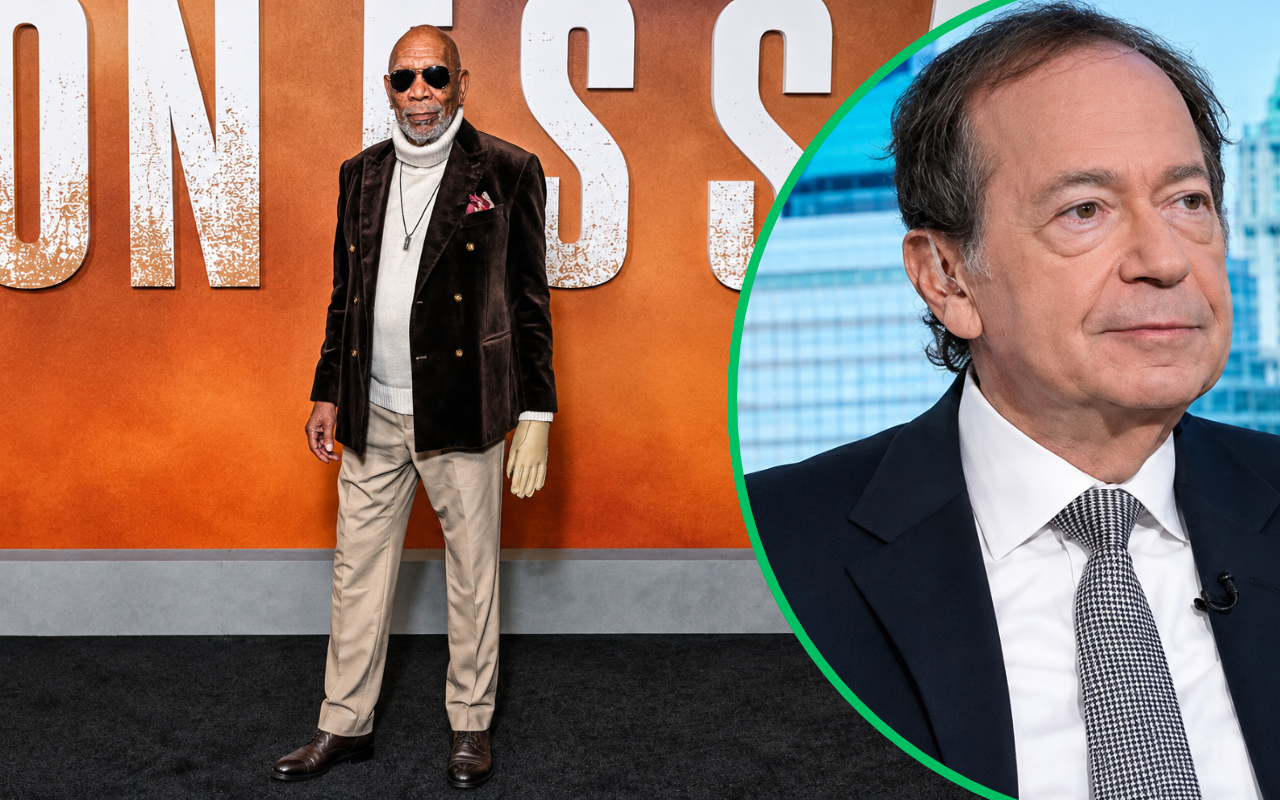
Morgan Freeman and John Paulson are two well-known American personalities who have achieved remarkable success in completely different professional worlds. Morgan Freeman is celebrated internationally for his extraordinary acting career, memorable movie performances, and unmistakable voice. John Paulson, meanwhile, is recognized as a successful financier and investor who became one of the most talked-about figures on Wall Street following his investment decisions during the 2007–2008 financial crisis.
Although their names sometimes appear together in online searches, their professional backgrounds tell two very different stories. Freeman established his reputation through decades of work in entertainment, while Paulson developed his influence through investment management, financial strategies, and philanthropy. Their stories offer an interesting comparison of ambition, patience, professional development, and the different ways individuals can achieve lasting success.
Understanding Morgan Freeman and John Paulson requires looking beyond their public recognition. Their early experiences, educational backgrounds, career decisions, personal interests, and contributions to society reveal how two individuals can follow completely different paths while becoming influential figures in American public life.
Who Is Morgan Freeman?
Morgan Freeman is an American actor, producer, and narrator widely regarded as one of the most respected performers in Hollywood. Born on June 1, 1937, in Memphis, Tennessee, he developed an interest in acting at a relatively young age. However, his journey toward international recognition was neither quick nor straightforward. He spent many years developing his abilities before receiving the major opportunities that eventually transformed his career.
Freeman grew up in a family with limited financial resources and experienced different environments during his childhood. His early education and experiences helped shape his personality and understanding of the world. Although acting attracted his attention, he initially explored another professional direction by joining the United States Air Force after graduating from high school in 1955. He served until 1959, working as a radar technician before deciding to pursue his interest in performing.
After leaving military service, Freeman moved toward the entertainment industry. He studied acting, participated in theatrical productions, and gradually developed the skills necessary to compete in a demanding profession. His early career included stage performances and television appearances, but mainstream recognition took considerable time.
His performance in the television children’s program The Electric Company introduced him to a wider audience during the 1970s. Later, films such as Street Smart, Driving Miss Daisy, and Glory helped establish his reputation as a serious and versatile actor. Freeman eventually became internationally famous through performances in films including The Shawshank Redemption, Se7en, Bruce Almighty, and Million Dollar Baby.
His Academy Award for Best Supporting Actor for Million Dollar Baby in 2005 represented an important milestone in a career built through decades of dedication.
John Paulson and His Journey in the Financial World
John Paulson is an American investor and hedge fund manager best known for founding Paulson & Co., an investment management firm established in 1994. His career developed in a world very different from Morgan Freeman’s, where financial analysis, market research, risk management, and investment decisions determine professional success.
Born on December 14, 1955, in Queens, New York, Paulson demonstrated an early interest in business. His educational background played an important role in preparing him for a career in finance. He attended New York University, where he graduated with a degree in finance in 1978. He subsequently earned an MBA from Harvard Business School in 1980.
Before establishing his own investment firm, Paulson gained experience working with several financial organizations. His professional background included positions at Boston Consulting Group, Odyssey Partners, Bear Stearns, and Gruss Partners. These experiences helped him understand investment strategies, mergers and acquisitions, financial markets, and the management of complex transactions.
The establishment of Paulson & Co. marked an important step in his professional development. Initially, the firm concentrated on investment opportunities involving mergers, acquisitions, and other financial events. Over time, it developed a reputation for identifying opportunities that other investors sometimes overlooked.
Paulson became particularly famous during the financial crisis of 2007–2008. His investment strategy involving subprime mortgage-related securities generated extraordinary returns and made him one of the most recognizable figures in modern hedge fund history.
The Financial Crisis That Made John Paulson Famous
The 2007–2008 financial crisis was one of the most significant economic events of the modern era. Problems in the American housing market gradually spread throughout the financial system, creating serious difficulties for banks, investment institutions, homeowners, and international markets.
During the years leading up to the crisis, mortgage lending expanded rapidly. Financial institutions provided loans to borrowers with different credit histories, including individuals who faced greater difficulties making regular payments. Many mortgage-related financial products were packaged and sold to investors, creating complicated relationships between housing prices, lending institutions, and investment markets.
John Paulson recognized that the housing market had become vulnerable. Instead of following the widespread belief that property prices would continue rising, he developed investment positions that could benefit if mortgage-related securities lost value.
His strategy involved credit default swaps, financial contracts that can provide protection against the default or deterioration of specified debt instruments. As mortgage-related securities experienced severe losses, the positions associated with Paulson’s strategy generated substantial profits.
This investment success attracted international attention. It also made Paulson an important subject in discussions about financial forecasting, market research, and the importance of questioning popular investment assumptions.
However, the financial crisis also caused enormous economic damage. Millions of people experienced housing difficulties, unemployment, and financial insecurity. Therefore, Paulson’s investment success should be understood within the much wider economic circumstances of that period.
Morgan Freeman’s Most Memorable Films and Achievements
Morgan Freeman’s professional achievements extend far beyond one successful film. His career includes dramatic performances, action movies, comedies, documentaries, and television appearances. His ability to portray characters with different personalities has helped him maintain relevance across several generations of movie audiences.
One of his most celebrated performances came in The Shawshank Redemption. Released in 1994, the film became one of the most respected productions in modern cinema. Freeman’s portrayal of Ellis Boyd Redding, commonly known as Red, remains particularly memorable because of the character’s emotional depth and thoughtful narration.
Another important achievement was his performance in Million Dollar Baby, directed by Clint Eastwood. His portrayal of Eddie Dupris demonstrated his ability to communicate complex emotions through subtle expressions and carefully controlled dialogue.
Freeman also appeared in Christopher Nolan’s The Dark Knight trilogy, playing Lucius Fox, an important character associated with Bruce Wayne’s technological operations. His involvement in the films introduced him to another generation of international movie audiences.
Beyond acting, Freeman has become famous for his narration work. His distinctive voice has been featured in documentaries, television productions, and major films. For many viewers, his narration represents authority, warmth, and clarity.
His professional journey demonstrates that success does not always happen early in life. Freeman continued developing his career for decades, eventually becoming one of Hollywood’s most recognizable performers.
Business Interests, Investments, and Professional Activities
Although Morgan Freeman and John Paulson work in different industries, both have professional interests extending beyond their most recognizable achievements.
Freeman has participated in entertainment-related business activities, including film production. In 1997, he co-founded Revelations Entertainment with producer Lori McCreary. The company has been involved in developing film and television projects, providing Freeman with opportunities to contribute to productions beyond his work as an actor.
He has also been associated with Ground Zero Blues Club in Clarksdale, Mississippi. The establishment reflects his interest in blues music and the cultural heritage of the Mississippi Delta.
John Paulson’s professional activities have been more directly connected to financial markets. Through Paulson & Co., he managed investment strategies involving mergers, event-driven opportunities, and credit markets. His experience demonstrates how financial success can depend on identifying market conditions before they become widely recognized.
However, investment performance is never guaranteed. Paulson’s subsequent investment activities produced mixed results, illustrating that even highly experienced investors face uncertainty. In 2020, he announced that he would return capital to outside investors and transition his hedge fund business toward a family-office structure.
These different business experiences highlight two distinct approaches to professional expansion. Freeman developed opportunities connected to entertainment and culture, while Paulson concentrated on financial investment and wealth management.
Philanthropy and Contributions Beyond Their Careers
Philanthropy provides another interesting area for understanding Morgan Freeman and John Paulson. Both have been associated with charitable activities, although their contributions have taken different forms.
Morgan Freeman has supported educational, cultural, and community initiatives, particularly in Mississippi. His connection to the region goes beyond his childhood experiences. He has participated in projects intended to improve educational opportunities and support local communities.
Through philanthropic activities associated with the Tallahatchie River Foundation, Freeman has supported early childhood education and initiatives aimed at helping young people develop stronger educational foundations.
His environmental interests have also attracted attention. In 2014, Freeman converted part of his Mississippi property into a honeybee sanctuary, reflecting concerns about declining bee populations and their importance to the natural environment.
John Paulson has made several major philanthropic contributions to educational institutions and public organizations. Among his most notable donations was a $400 million gift to Harvard University in 2015, supporting its School of Engineering and Applied Sciences. The school was subsequently named the Harvard John A. Paulson School of Engineering and Applied Sciences.
He also contributed $100 million to New York University’s endowment and supported the Central Park Conservancy with a substantial donation.
These contributions demonstrate how individuals who achieve financial success in different industries can use their resources to support education, environmental interests, and public institutions.
Are Morgan Freeman and John Paulson Related or Professionally Connected?
One of the most interesting questions surrounding the keyword Morgan Freeman and John Paulson is whether the two individuals have a direct personal or professional relationship.
Their names appearing together in online searches may create the impression that they share a business partnership, family connection, or significant professional collaboration. However, publicly available information does not establish a confirmed family relationship, joint business venture, or major professional project between them.
Their biographies show that they developed their careers independently. Paulson’s career has involved investment professionals, financial institutions, business executives, universities, and philanthropic organizations.
It is possible for prominent individuals from different industries to attend the same public events or share connections through charitable organizations. Nevertheless, such possibilities should not be presented as established facts without reliable supporting information.
The more accurate way to understand their association is as a comparison between two successful American personalities. One became internationally recognized through storytelling and entertainment, while the other developed his reputation through financial markets and investment management.
Their different experiences make the comparison interesting, but public recognition alone does not demonstrate a personal relationship.
Lessons From Their Different Paths to Success
The professional journeys of Morgan Freeman and John Paulson offer several useful lessons about ambition, preparation, and long-term achievement.
Freeman’s career demonstrates the importance of patience. He did not become an internationally recognized actor immediately. Instead, he spent years working in theater and television, improving his abilities, and accepting opportunities that gradually strengthened his reputation. His eventual success shows that professional development can take time, even when someone has considerable talent.
Paulson’s experience highlights the importance of research and independent thinking. During the housing boom, many financial market participants believed property prices would continue increasing. Paulson identified weaknesses in the mortgage market and developed a strategy based on his assessment of the risks.
Both stories also demonstrate the importance of adapting to changing circumstances. Freeman moved between theater, television, cinema, and production, while Paulson developed his investment business across different market environments.
Perhaps the most significant lesson is that success has different meanings. For an actor, it may involve artistic recognition, memorable performances, and a lasting connection with audiences. For an investor, it may involve financial results, business development, and the ability to manage risk.
Neither career follows a universal formula. Both demonstrate the importance of developing expertise, making thoughtful decisions, and maintaining a clear professional direction.
Conclusion
Morgan Freeman and John Paulson represent two very different examples of achievement in American professional life. Freeman established an extraordinary reputation through decades of acting, narration, and entertainment production. Paulson became a prominent financial personality through investment management, particularly his highly successful strategy during the 2007–2008 financial crisis.
Their professional achievements, business activities, and philanthropic interests provide plenty of material for comparison. Freeman’s contributions are closely connected to cinema, storytelling, education, and community initiatives, while Paulson’s public legacy includes investment management and substantial support for educational and cultural institutions.
Although their names appear together in online searches, there is no established public evidence of a major personal, family, or business relationship between them. Their significance comes from their individual accomplishments rather than a documented partnership.
