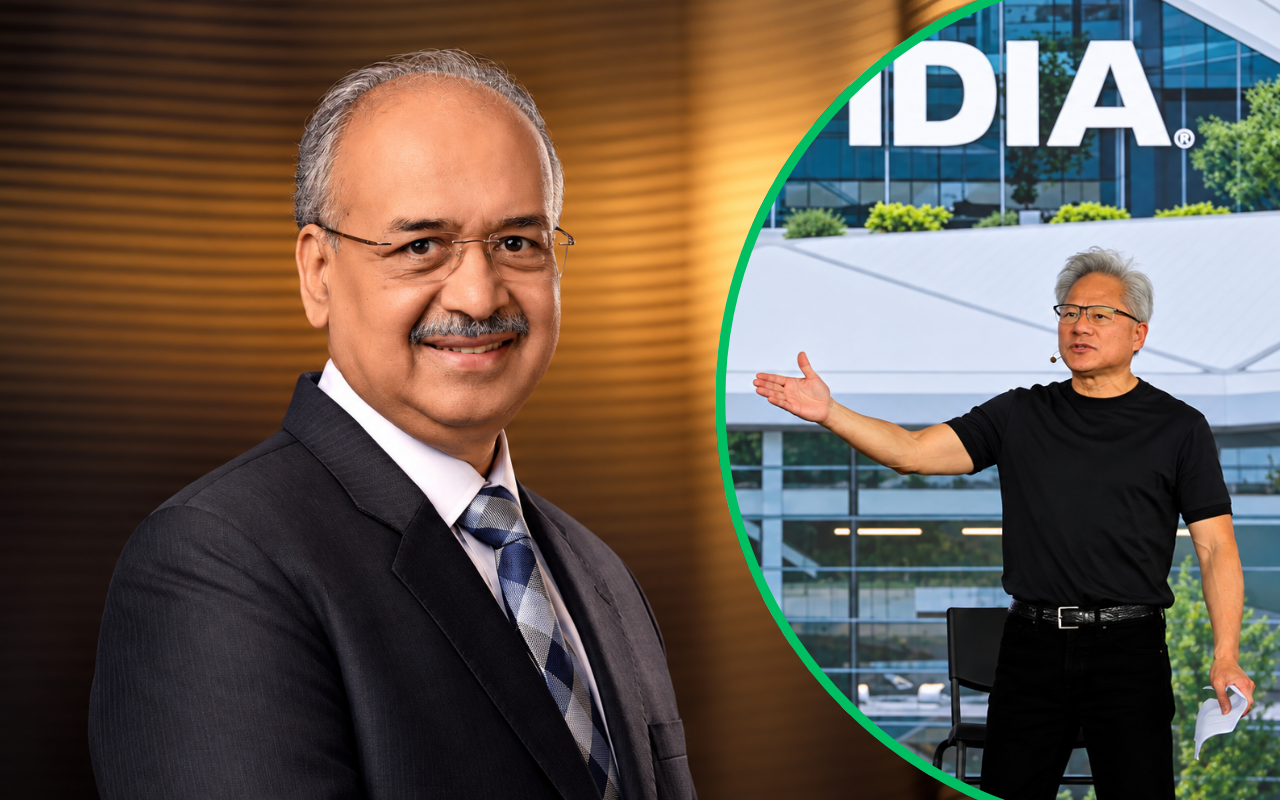
In the modern business world, a few entrepreneurs stand out not only because of their wealth but because of the lasting impact they create. Dilip Shanghvi and Jensen Huang are two such leaders who transformed small beginnings into globally recognized success stories. Although they belong to completely different industries pharmaceuticals and artificial intelligence they share similar qualities: long-term vision, calculated risks, innovation, and an ability to understand future opportunities before others.
Dilip Shanghvi built one of the world’s largest pharmaceutical companies through strategic acquisitions and a deep understanding of healthcare markets. Jensen Huang transformed NVIDIA from a graphics chip company into one of the most influential technology companies driving the artificial intelligence revolution. Their journeys demonstrate how patience, adaptability, and strong leadership can redefine entire industries.
Early Life and Background of Dilip Shanghvi
Dilip Shanghvi was born in Gujarat, India, in 1955 and grew up in a business-oriented family. His father operated a pharmaceutical distribution business, which gave him early exposure to the medicine industry. Instead of following a traditional career path, Shanghvi recognized an opportunity to move from pharmaceutical distribution into manufacturing.
After completing his education, he gained practical experience by working alongside his father. This experience helped him understand the challenges of the pharmaceutical market, customer needs, and the importance of producing specialized medicines.
In 1983, Shanghvi founded Sun Pharmaceutical Industries with a small amount of capital borrowed from his father. The company initially focused on producing medicines for psychiatric disorders and started with a limited product portfolio and a small team.
At the beginning, Sun Pharma was far from the global pharmaceutical giant it is today. However, Shanghvi’s focus on niche markets, quality products, and controlled expansion allowed the company to grow steadily.
The Rise of Sun Pharmaceutical Industries
Dilip Shanghvi’s approach to business was different from many traditional entrepreneurs. Instead of competing directly with established pharmaceutical companies, he targeted specialized segments where competition was lower and opportunities were greater.
Over the years, Sun Pharma expanded its product portfolio and entered international markets. The company grew through a combination of organic development and strategic acquisitions. Shanghvi became known for identifying undervalued companies and transforming them into profitable businesses.
One of the biggest milestones in his career came with Sun Pharma’s acquisition of Ranbaxy Laboratories in 2014. The deal, valued at approximately $4 billion, significantly increased Sun Pharma’s global presence and strengthened its position as a major pharmaceutical player.
Under Shanghvi’s leadership, Sun Pharma expanded into areas including specialty medicines, generic drugs, and advanced therapies. His business philosophy focused on sustainable growth rather than short-term success.
Jensen Huang’s Journey From Engineer to Technology Icon
Jensen Huang’s story represents another type of entrepreneurial transformation. Born in Taiwan in 1963, Huang moved to the United States and developed a strong interest in engineering and technology. He studied electrical engineering at Oregon State University and later earned a master’s degree from Stanford University.
Before becoming an entrepreneur, Huang worked in the semiconductor industry at companies including AMD and LSI Logic. His technical background gave him valuable knowledge about computer architecture and chip design.
In 1993, Jensen Huang co-founded NVIDIA along with Chris Malachowsky and Curtis Priem. The company was created with the vision of developing advanced graphics technology for computers and gaming.
At that time, the idea of specialized graphics processors was considered risky. Many companies were competing in the graphics market, and there was no guarantee that NVIDIA would survive.
However, Huang believed that powerful computing would become increasingly important in the future.
How NVIDIA Became a Leader in Artificial Intelligence
NVIDIA initially became famous for graphics processing units (GPUs) used in gaming computers. However, Jensen Huang saw that GPUs had capabilities far beyond gaming. Their ability to process large amounts of information simultaneously made them ideal for scientific computing and artificial intelligence.
A major turning point came with NVIDIA’s development of CUDA, a software platform that allowed developers to use GPUs for general computing tasks. This decision positioned NVIDIA as a critical company in the AI revolution years before artificial intelligence became mainstream.
When deep learning and advanced AI models began expanding, NVIDIA’s technology became essential for training complex systems. Today, the company’s chips power many of the world’s most advanced AI applications.
Huang’s greatest strength was his ability to think decades ahead. While competitors focused mainly on gaming graphics, he invested heavily in technologies that would eventually become the foundation of modern AI.
Different Industries, Similar Leadership Principles
Although Dilip Shanghvi and Jensen Huang operate in completely different fields, their leadership styles reveal several similarities.
Both leaders focused on long-term opportunities instead of chasing immediate results. Shanghvi spent decades building Sun Pharma into a global healthcare company, while Huang spent years preparing NVIDIA for the future of artificial intelligence.
They also understood the importance of innovation. Shanghvi used strategic acquisitions and pharmaceutical research to expand his company. Huang invested heavily in chip development and software ecosystems.
Neither entrepreneur achieved success overnight. Their achievements were the result of consistent decision-making, calculated risks, and the ability to adapt to changing markets.
The Importance of Vision in Their Success
Vision is one of the strongest connections between Shanghvi and Huang.
Dilip Shanghvi recognized that the pharmaceutical industry offered significant growth opportunities, especially through specialized medicines and global expansion. His strategy helped Sun Pharma move from a small Indian company into an international pharmaceutical organization.
Jensen Huang recognized that computing power would become increasingly important across industries. His decision to focus on GPU technology and AI infrastructure helped NVIDIA become a central player in the technology world.
Both leaders understood something important: successful businesses are not only built by responding to current trends but by preparing for future changes.
Challenges Faced Along the Way
Success at this level rarely comes without difficulties.
Sun Pharma faced regulatory challenges, integration issues after acquisitions, and competition in global pharmaceutical markets. Managing a multinational healthcare company requires constant attention to quality, compliance, and innovation.
NVIDIA also experienced difficult periods. The company faced intense competition in the semiconductor industry and uncertainty about the future of graphics technology. However, Huang continued investing in research and development even when the outcomes were uncertain.
Their ability to overcome challenges became a defining part of their leadership stories.
Comparing Their Business Philosophies
Dilip Shanghvi’s business philosophy revolves around patience, strategic expansion, and identifying valuable opportunities. His success shows the power of understanding markets deeply and making disciplined decisions.
Jensen Huang’s philosophy centers around technological innovation, creativity, and building platforms that enable future industries. Instead of simply selling products, NVIDIA created an entire ecosystem around AI computing.
While Shanghvi built an empire around medicine and healthcare, Huang built one around computing power and artificial intelligence.
The Global Impact of Their Companies
Sun Pharma has played an important role in making medicines more accessible around the world. Its products serve millions of patients and the company remains one of India’s most influential pharmaceutical organizations.
NVIDIA has become a driving force behind modern artificial intelligence. Its technology supports applications ranging from research and healthcare to autonomous vehicles and advanced computing.
Both companies demonstrate how entrepreneurship can influence society far beyond financial success.
Lessons Entrepreneurs Can Learn From Dilip Shanghvi and Jensen Huang
The journeys of Dilip Shanghvi and Jensen Huang provide several valuable lessons for entrepreneurs.
First, success requires patience. Both leaders spent decades developing their companies before reaching global recognition.
Second, innovation matters. Businesses that fail to adapt often disappear, while companies that anticipate future needs can create entirely new markets.
Third, strong leadership requires accepting uncertainty. Both entrepreneurs made decisions when the outcomes were not guaranteed, but their confidence in their vision helped them move forward.
Finally, lasting companies are built through continuous improvement. Shanghvi and Huang did not rely on one successful product or idea. They continuously evolved their businesses.
Read More: Dilip Shanghvi and Jensen Huang: Two Visionary Leaders Who Built Global Empires Through Innovation
Conclusion
Dilip Shanghvi and Jensen Huang represent two different versions of modern entrepreneurship. One transformed healthcare through pharmaceuticals, while the other changed computing through artificial intelligence technology. Their industries may be different, but their journeys share powerful similarities.
Both started with ambitious ideas, faced uncertainty, and built organizations that changed the world. Their stories prove that extraordinary success comes from vision, innovation, resilience, and the courage to invest in the future.
